EU investment offers hope for Africa’s small businesses
With rising fuel prices, small businesses in South Africa are forced to be self-reliant. A Tembisa taxi association’s own fuel depot shows grassroots resilience, and what a small business looks like when nobody is helping.

First published by Sowetan on 20 Oct 2026.
This month a litre of petrol in South Africa crossed R30, and the Automobile Association warns that November could bring another increase of up to R4.58. Economists say – and we all know – that the real damage lands far from the pump, in taxi fares, in food prices, and in the choice more families now face between getting to work and putting a meal on the table.
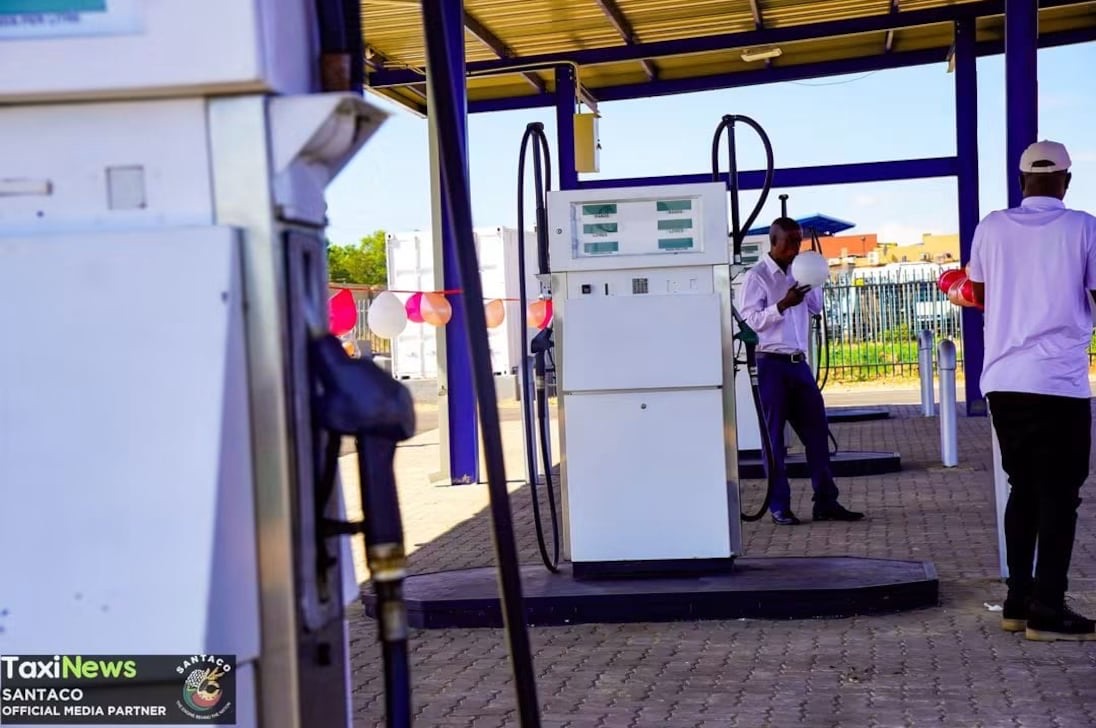
In Tembisa, one taxi association decided not to wait for relief. It spends about R140 million a year on fuel and gets no discount, so it opened its own depot with a private partner. Fuel is R1 a litre cheaper, with 15 local jobs and 38 more at the car wash next door. That is resilience and what a small business looks like when it solves its own problem. It is also what a small business looks like when nobody is helping. South Africans are self-reliant because we have to be.
But this is not only a South African story. The IMF warned that inflation is rising across Sub-Saharan Africa, that governments now spend about 12% of their revenue on interest, and that aid is shrinking for the second year running. So when the government is struggling, growth has to come from the people already doing the work - traders, caterers, taxi owners, social enterprises running a crèche, or recycling collectives.
And while no single partner will fix this, we don’t have to go it alone. The European Union’s Global Gateway Initiative, promises to mobilise 150 billion euros in investment across Africa. This is just on one piece of the puzzle towards economic resilience, but it’s worth our attention.
Let’s review the alternatives. Washington, has a focus on winning, and on using bully tactics to get what they want. Beijing may be offering a range of cheap and flashy cars, but this undercuts the local manufacturing industry, with broad implications. And according to SAIIA, “Much of Russia’s influence rests on history and rhetoric, with few tangible benefits for African partners”, particularly now that the country is bogged down in a war against the Ukraine.
Brussels, by contrast, is slow, form-obsessed and bureaucratic. Yet it works by rules that we can invoke, and regulations that are clear. Rights, the rule of law and accountable institutions are principles South Africa wrote into its own constitution, after a struggle in which many Europeans stood with us. I have argued elsewhere that the EU is imperfect, but it’s our best option when it comes to partnership. This alignment and partnership offers the bedrock of partnership, and it means we can argue with Europe in a language it understands.
But holding someone to account only helps if you can see what they are doing, and Global Gateway is hard to see from where a small business owner stands. Where are the projects? Who gets the money? How does a taxi association in Tembisa, or a co-operative in Soweto, apply? That is bureaucracy, and it is also a closed door.
So here are three asks. First, publish every project, its budget and its beneficiaries, in plain language, where communities can read them. Second, ring-fence funding and simpler access for SMEs and social enterprises, not only ports, corridors and power lines. Third, make community engagement a condition of every project.
The responsibility is ours too. African governments, business associations, civil society and the media must interrogate these projects: who benefits, who was consulted, and whether the promised local jobs actually appear. We come to this partnership as equals, and should negotiate for an informed and organised set of projects, as a continent, not one capital at a time.
The fuel price is rising based on forces far beyond our control. What we build around it is within our control: resilient small businesses, partners we can question, institutions that answer to communities. Europe is slow, but it is the partner worth the effort, as long as we work to ensure communities benefit, not just big business.